
The Noonday Demon
The ancient monks had a name for what happens to you every afternoon — and it's not laziness.
"Acedia is that noonday listlessness and ennui mixed with a daydream of regret and jealousy... Sloth, for instance, is not laziness so much as wilful distraction."
— Ronald Rolheiser, Sacred Fire
The 2:30 Confession
I'll be honest about something most leaders won't say out loud.
Some afternoons, I'm useless.
Not because the list is empty. It's more like a low-grade flatness settles in somewhere between lunch and 4pm, and I find myself doing the thing I swore I wouldn't do. Scrolling LinkedIn. Checking ESPN. Clicking through the same feeds I already checked twenty minutes ago. Not because I'm enjoying it. Because I'm filling something.
Part of it is physical. By mid-afternoon, the morning's output has drained the tank. If you have any ADHD wiring in you, you know this hour well. The executive function that carried you through the morning starts to sputter, and the phone is always right there.
But underneath the scrolling is a question I don't quite want to look at directly:
What am I missing?
Not a task. Something harder to name. A low-grade sense that the afternoon has gone flat and I'm not sure what to do with it.
I used to think this was a discipline problem. Something to push through with better systems and tighter time blocks.
Then I learned the ancient monks had a word for it. And they didn't call it laziness.
The Noonday Demon
The desert fathers of the 4th and 5th centuries called it acedia and took it seriously enough to name it one of the eight capital vices. Evagrius Ponticus described it as "the most troublesome of all" the demons a monk faced.
They called it the noonday demon because it struck in the middle of the day, when the morning's energy had worn off and the evening hadn't arrived yet. The monk would grow restless in his cell. He'd convince himself something was wrong with the monastery, his vocation, his brothers, God. He'd feel a pull toward anywhere that wasn't here.
Sound familiar?
I've been on a Rolheiser reading kick lately, working through Sacred Fire, The Holy Longing, and Domestic Monastery. If you haven't read him, start with The Holy Longing. He describes acedia as a kind of flattening out, a loss of energy that deadens deep feeling and thought. The early church considered it a capital sin. Later it was renamed sloth, but Rolheiser is careful to clarify: sloth is not laziness. It is willful distraction.
That's the line that stopped me cold.
The doom scrolling isn't rest. It's willful distraction. I'm not lazy. I'm running from something I haven't learned to sit with.
What the Restlessness Is Actually Saying
Rolheiser's framework cuts to the heart of this. We are not restful people who occasionally get restless. We are restless people who occasionally find rest. The default state is unquiet. And the question is never whether we feel the restlessness. The question is what we do with it.
Augustine named it first: "You have made us for Yourself, Lord, and our hearts are restless until they rest in You."
The afternoon flatness, the scrolling, the zoning out, the low-grade "what am I missing?" is not a productivity problem. It is a spiritual signal. Your soul is restless, looking for something. And if you don't give it the right thing, it will take the nearest available substitute.
For the desert monk, the nearest substitute was wandering out of the cell. For the modern leader, it's the phone.
The mechanism is identical. The cell changes. The demon doesn't.
What the Monks Actually Did
The desert fathers didn't try to fix acedia with productivity. They had one prescription: stay in the cell.
Abba Moses put it plainly: "Stay in your cell and your cell will teach you everything."
The cell wasn't a room. It was a practice. The deliberate refusal to run from the discomfort of the present moment. The monk who stayed, who sat in the flatness without feeding it, found that the demon eventually passed. And in the staying, something was built that couldn't be built any other way.
Evagrius prescribed working with your hands during acedia. Not to escape the feeling, but to stay present in the body while the restlessness moved through. Simple, physical, repetitive work. Not as distraction, but as anchoring.
When the flatness hits, don't run. Don't fill the space. Stay.
The Scripture That Reframes Everything
Psalm 131 is three verses. And it might be the most countercultural passage in all of Scripture for a high-capacity leader.
"My heart is not lifted up; my eyes are not raised too high; I do not occupy myself with things too great and too marvelous for me. But I have calmed and quieted my soul, like a weaned child with its mother; like a weaned child is my soul within me."
— Psalm 131:1-2
David is not describing the absence of ambition. He is describing a trained interior posture. I have calmed and quieted my soul. The Hebrew word for quieted here is damam — to be still, to cease striving. An active verb. Something he did. A practice he cultivated.
The image is a weaned child with its mother. Not a hungry child demanding to be fed. A satisfied one. Just resting. Present. Enough.
That is the antidote to acedia. Not more productivity. A soul trained to be still, to be present without demanding that the present moment be more than it is.
This is the work. And it is harder than any deal you'll close this quarter.
Where I Actually Am With This
I want to be honest here, not just theoretically vulnerable.
This is where I am weak right now. The afternoon demon is not a past struggle I've figured out. It is a current one. I am in the middle of building spiritual practices and structure to find freedom from it, and I don't have it all worked out yet.
What I've done is bring the men I walk with into it. I've told them where I struggle. We're processing it together while I transparently work my way toward freedom and grace. That's the only way I know how to do formation — in the open, with people who will tell you the truth.
Here's what I'm learning: the goal of our days is not productivity. It is presence. The spiritual disciplines are not boxes to check. They are pathways back to presence. And when we drift into the slavery of a self-governed life, managing our own outcomes and filling our own gaps, the afternoon fog is often the first sign.
That drift is not the end of the story. It is a window. A chance to fall back into the arms of the Father and return to sonship. To stop performing and start receiving. To remember that we are not owners of this life. We are sons.
What to Do When the Fog Rolls In
Name it. Say it out loud: This is acedia. I am not broken. This is a signal, not a sentence. Naming it breaks the reflex.
Stay in the cell. Sit in the flatness for five minutes before you reach for anything. The monks were right. The cell teaches you things that running never will.
Work with your hands. A walk without a podcast. A notebook. Something physical. Get out of your head and into your body.
Pray the Psalm. Psalm 131 is three verses. Read it slowly. I have calmed and quieted my soul. Let that be the posture you return to, not a performance, just a return.
The Invitation in the Flatness
The noonday demon is still showing up. He's just traded the desert cell for your phone screen.
But here's what the monks understood and what I'm slowly learning: the flatness is not the enemy. Running from it is. The restlessness, if you stay in it long enough, becomes a door. Not to more productivity. To more presence. To the Father who is already in the room, waiting for the son to stop striving and come home.
The scrolling is a symptom. The flatness is the invitation.
Stay in the cell.
If this resonated, subscribe to the 85 Leadership newsletter at 85leadership.com for weekly reflections on leadership, formation, and the inner life that most content ignores.
Chris DeLeenheer is the author of Quiet Drift and a builder, mentor, and hybrid athlete based in Waco, TX.
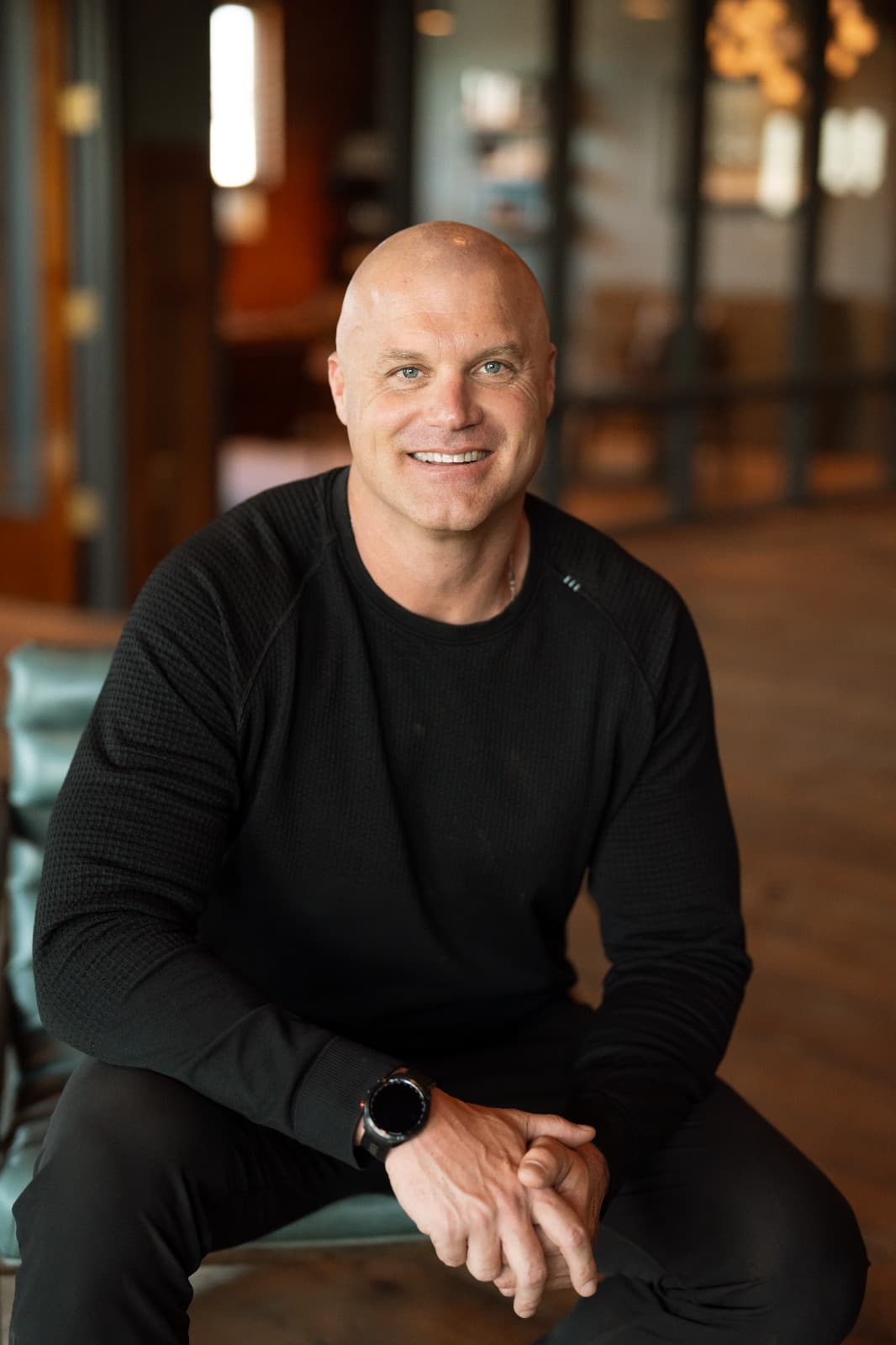
Written by
Chris DeLeenheerChris DeLeenheer is a husband to Libby, a father to four daughters, and a faith-first leader whose life moves between building operating companies, training hard miles, and trying to follow Jesus honestly. He writes and runs out of Waco, Texas, and has spent the last decade quietly learning what it costs a successful man to stay awake — and what it takes, day by day, to find his way back. Quiet Drift is the book from that journey.