
Fool's Gold
What ego costs you when you're running a race God never assigned. Reflections on Ryan Holiday's Ego Is the Enemy from a biblical and redemptive standpoint.
"The first principle is that you must not fool yourself — and you are the easiest person to fool."
— Richard Feynman
Ryan Holiday opens Ego Is the Enemy with that line. I've read a lot of books. That one stopped me cold.
Because it's not talking about weakness or failure. It's talking about the most capable, driven, self-aware people in the room — and saying the person most likely to deceive you is the one staring back in the mirror.
That's not a productivity problem. That's a spiritual one.
What Ego Actually Is
Holiday is precise. Ego is not confidence. Not ambition. Not drive.
Ego is "an unhealthy belief in our own importance. Arrogance. Self-centered ambition."
And here's what makes it dangerous for people like us — people who care, who want to build something meaningful, who actually try:
Ego is the enemy of mastering a craft. Of real creative insight. Of longevity.
That's not a warning for the lazy. That's a warning for the driven. The ego doesn't attack the apathetic. It attacks the ambitious. And it does it quietly, from the inside.
The Perceived Self vs. The Actual Self
Ego causes us to live from our perceived self rather than our actual self. And those two selves are almost never the same person.
The perceived self is curated — the wins, the exits, the milestones, the version you've told so many times you've started to believe it yourself.
The actual self is messier. It has losses in it. Doubt. Seasons where you didn't know what you were doing. Decisions you'd take back.
The invitation of the gospel is not to clean up the perceived self. It's to bring the actual self — broken, honest, unpolished — into the light. Because that's the only self that can be transformed. And the only self God is actually working with.
The False Race
I want to tell you something honest about why I started training.
When I began my fitness journey, I wanted to be jacked. I was tired of looking sloppy. Embarrassed to take my shirt off at the beach. My beginning motives were not the best.
As I've continued — and repented — that ambition has slowly changed.
I do endurance races now because I am a finisher. I want to finish projects well. My marriage well. Life well. I am a finisher, so I run.
God also began speaking something into my identity: it doesn't matter if I don't have a team or a jersey. I am called to train, eat, and recover like an athlete so the best version of me is available every day of the week. Not impressive. Available.
I want longevity — not just the ability to live longer, but to live better as I get older. To play with grandkids in the yard. Travel with my wife. Hike with my kids. By the time most people experience the old man symptoms, it's too late to change.
Here's the ego trap in all of it: when I run into people I haven't seen in a while, they'll often say, "What happened?! You got jacked!" And honestly — it always feels good when people notice. But that feeling is the beginning of a false narrative. I am impressive.
I'm not impressive. That doesn't mean I'm unimpressive. It's just not the goal. It's a false race.
Ego gets us running races God never assigned to us.
It can bring pressure to be extreme, radical, dogmatic about lifestyle choices that are right for my race but not required for everyone else's. Honestly, a lot of people look at how I live and think it looks miserable. That's okay. When I laid down the need to be impressive, it stopped bothering me when people didn't celebrate, join in, or show interest.
Success isn't about my following. It's defined by my faithfulness.
The Wrong Mile Markers
This is where ego becomes a theological problem, not just a strategic one.
Ego causes us to chase the wrong mile markers. Power. Money. Status. The desire to be impressive.
The trap inside each one:
If I want to feel powerful, I will resist servanthood. But Jesus said the greatest among you will be the servant of all (Matthew 23:11). The mile marker of power and the mile marker of Christlikeness are pointing in opposite directions.
If I chase money, I will compromise my values — not all at once, but one small rationalization at a time. You cannot serve two masters (Matthew 6:24). The money doesn't have to win the battle outright. It just has to make you hesitate.
If I want to be impressive, I will only let people see the wins. I'll hide the losses, the confusion, the brokenness of the actual journey. And I'll become exactly the kind of leader nobody can trust — because they can only see the curated version of me.
That's fool's gold. It looks like success. It costs you everything that actually matters.
The Whiteboard
I have a message on a whiteboard in my gym.
No applause needed.
It's not a productivity hack. It's a spiritual posture. In a world constantly asking what do people think of you? — this is my daily answer: I don't need them to think anything. I need to do the work. I need to let the Holy Spirit be the loudest voice I hear.
Paul said it plainly in Galatians 1:10:
"Am I now trying to win the approval of human beings, or of God? Or am I trying to please people? If I were still trying to please people, I would not be a servant of Christ."
That's not a rhetorical question. It's a diagnostic. Every decision you make today is answering it — whether you realize it or not.
The desert fathers called what Holiday calls ego by its real name: kenodoxia — vainglory. The craving for empty glory. The hunger for recognition that has nothing to do with whether the work is actually good. Evagrius Ponticus said it was the most subtle of all the passions — because it disguises itself as virtue. Underneath it is one constant, low-grade question: What do people think of me?
The prescription, for the monks and for Holiday, is the same: do the hidden work. Let the work speak. Stop performing and start building.
Jesus said it first: "Be careful not to practice your righteousness in front of others to be seen by them" (Matthew 6:1). The hidden work is not wasted work. It's the only work that lasts.
What Replaces Ego
Here's the honest answer: not more discipline. Not a better system. Not a stronger morning routine.
What replaces ego is a settled identity — one that doesn't need the room to validate it.
"He must increase, but I must decrease" (John 3:30). That's not self-deprecation. That's freedom. John the Baptist said it at the height of his influence, when he could have fought to stay relevant. He didn't. Because he knew whose race he was running and who it was for.
That's the posture. Not I am nothing. But I am not the point.
When your identity is anchored in who God says you are — not what the room thinks, not what the scoreboard shows, not what the last deal closed at — ego loses its leverage. It still shows up. But it doesn't get to drive.
Because Feynman was right. The easiest person to fool is yourself.
And the only way to stop fooling yourself is to stop being the one in charge of the audit.
The whiteboard doesn't say be humble. It says no applause needed. Because humility isn't a feeling. It's a decision you make before the room fills up.
Make it before the room fills up.
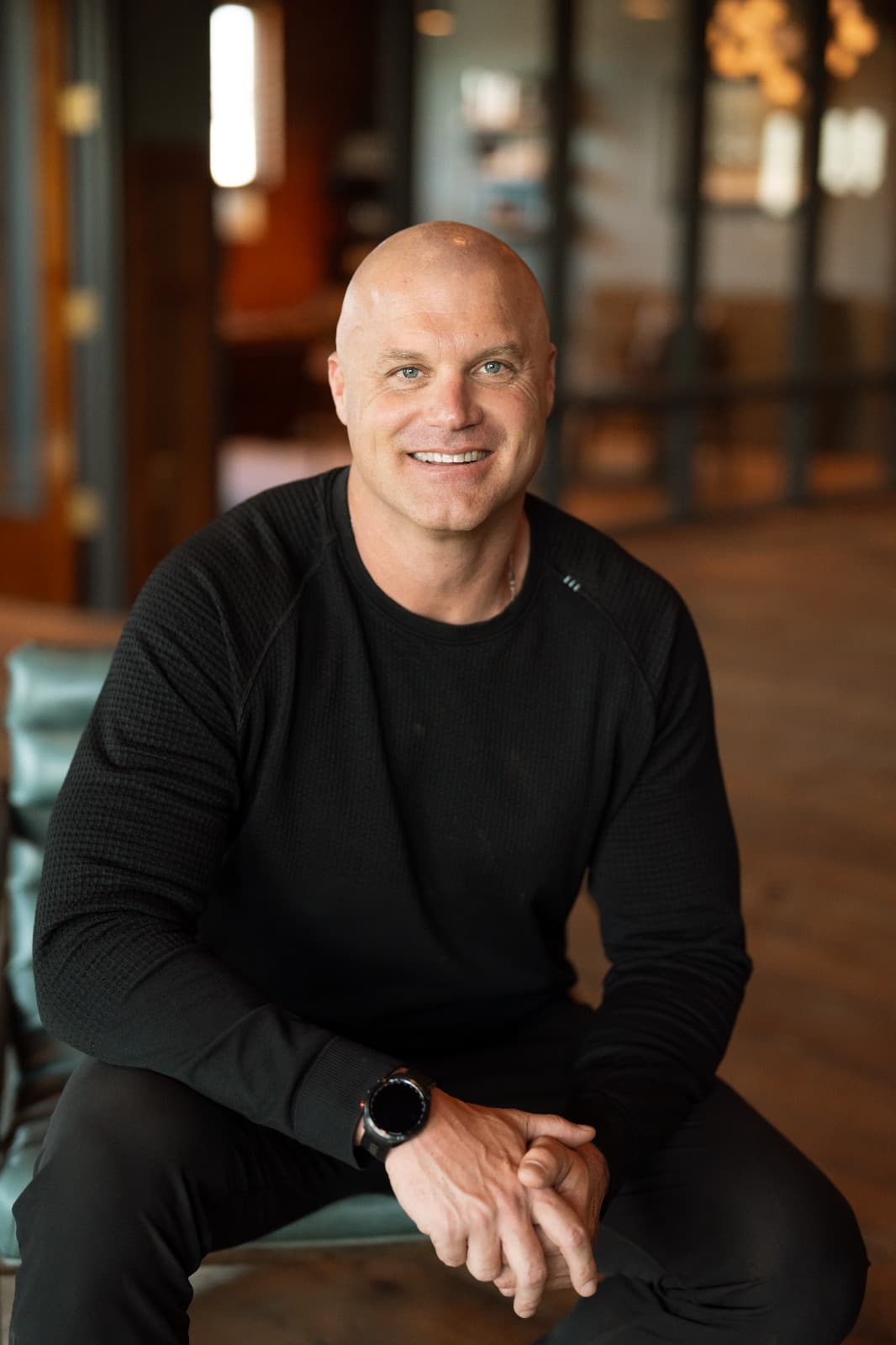
Chris DeLeenheer is the author of Quiet Drift and a builder, mentor, and hybrid athlete based in Waco, TX. Subscribe to the 85 Leadership newsletter at 85leadership.com.
Written by
Chris DeLeenheerChris DeLeenheer is a husband to Libby, a father to four daughters, and a faith-first leader whose life moves between building operating companies, training hard miles, and trying to follow Jesus honestly. He writes and runs out of Waco, Texas, and has spent the last decade quietly learning what it costs a successful man to stay awake — and what it takes, day by day, to find his way back. Quiet Drift is the book from that journey.