
Your Decision-Making Is the Tell
How you make decisions when no one is watching reveals who is actually Lord over your life.
"Discipleship must be stronger than cultural formation. Loyalty must be stronger than compromise."
— Jon Tyson, Beautiful Resistance
Why your spiritual infrastructure must grow with your responsibility — or you'll drift into a kingdom of your own making
There's a word buried in Hebrews 5 that most people read past without stopping.
The writer is making a case for maturity. And he uses a Greek word to describe what mature faith actually produces: αἰσθητήριον — aisthētērion. Translated in most English Bibles as "powers of discernment."
"But solid food is for the mature, for those who have their powers of discernment trained by constant practice to distinguish good from evil." (Hebrews 5:14)
Aisthētērion is a faculty word. It refers to the organs of perception — the sensory apparatus through which you receive and process reality. The writer's claim is striking: spiritual discernment is not a gift dropped into the passive believer. It is a trained capacity. Something that grows — or atrophies — based on how consistently you exercise it.
Read it again: trained by constant practice.
That's the language of an athlete. A surgeon. A craftsman. The implication is clear: discernment is not given to the sincere. It is built by the disciplined.
The Proverbs 3 Foundation
Before Hebrews gives us the practice, Proverbs gives us the posture.
"Trust in the Lord with all your heart and lean not on your own understanding; in all your ways submit to him, and he will make your paths straight. Do not be wise in your own eyes." (Proverbs 3:5-7)
Notice the architecture. The command is not simply trust God. It is trust God with all your heart — which implies that partial trust is the default. The natural drift is toward a divided heart: God gets Sunday morning, and we quietly manage everything else ourselves.
Together, these two passages form a complete picture:
- Proverbs 3 is the posture — surrender, trust, submission in all your ways.
- Hebrews 5:14 is the practice — trained senses, constant exercise, developed capacity.
Posture without practice produces sincere but undiscerning people. Practice without posture produces skilled but self-directed people. You need both.
The Complexity Problem Nobody Names
In college, the decisions were relatively contained. Now you're hearing God for a marriage. For children who are watching how you live. For employees whose livelihoods depend on your calls. For investors who trusted you with capital. For men you disciple who will pattern their lives after yours.
If you are genuinely committed to stewardship and surrender, your infrastructure for hearing God must scale with your increased responsibility.
The way you walked with God at 22 will not sustain the weight of what you're carrying at 42. A devotional habit built for a college student cannot bear the load of a CEO, a father, a disciple-maker, and an investor.
Why It's Hard for the Rich to Enter the Kingdom
Jesus said something uncomfortable for ambitious, capable people: "It is easier for a camel to go through the eye of a needle than for someone who is rich to enter the kingdom of God." (Matthew 19:24)
I don't think the warning is primarily about money. I think it's about a particular kind of drift that wealth and complexity accelerate — unintended independence. Not rebellion. Not conscious rejection of God's lordship. Just drift.
The rich man's temptation isn't greed. It's competence. The slow, quiet substitution of capability for dependence.
How to Know If You've Drifted
How you approach decision-making is the greatest indicator of who is actually Lord over your life. Not what you say on Sunday. Not what you post. The process you use when a real decision is in front of you — that's the tell.
- When did you last bring a significant decision to God before you had already decided?
- Do you have a practice of extended listening — not just speaking — in your time with God?
- Is there someone in your life who can ask "Did you actually pray about this?" and hold you to the answer?
- Are there categories of your life that have never been formally surrendered?
- When God's direction and your logic conflict, which one wins?
Building the Infrastructure
- Daily silence. Not just reading and talking. Sitting. Waiting. The Desert Fathers called this hesychia — holy stillness.
- Quarterly surrender. Four times a year, stop completely. Bring every major category of your life to the altar explicitly. Not a planning session — a surrender session.
- A decision journal. Before major decisions, write: What is God saying? What am I afraid of?
- A council of honest people. People who will ask: "Have you actually prayed about this, or have you decided and you're looking for confirmation?"
- Fasting tied to significant decisions. For men wired toward competence and control, one of the most powerful tools available.
The Real Question
Has my spiritual infrastructure grown to match the weight of my responsibilities — or am I carrying a complex life on infrastructure built for a simpler one?
The camel and the needle's eye is not a warning about success. It is a warning about the infrastructure failure that success makes possible.
Your life has grown more complex. The question is whether your infrastructure has kept pace.
If this resonated, subscribe to the 85 Leadership newsletter at 85leadership.com.
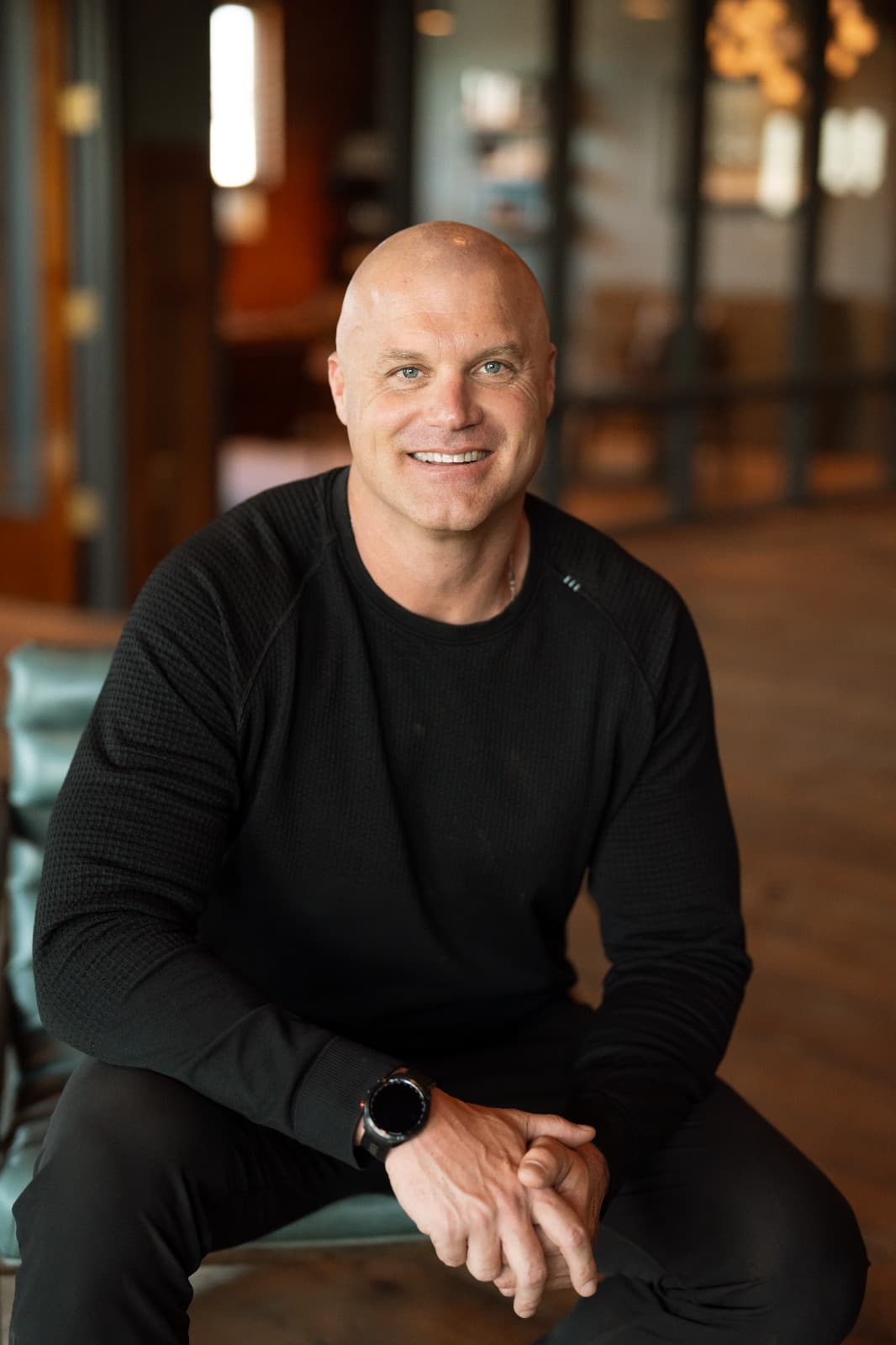
Chris DeLeenheer is the author of Quiet Drift and a builder, mentor, and hybrid athlete based in Waco, TX.
Written by
Chris DeLeenheerChris DeLeenheer is a husband to Libby, a father to four daughters, and a faith-first leader whose life moves between building operating companies, training hard miles, and trying to follow Jesus honestly. He writes and runs out of Waco, Texas, and has spent the last decade quietly learning what it costs a successful man to stay awake — and what it takes, day by day, to find his way back. Quiet Drift is the book from that journey.